New Report Leverages Route 66 To Show How Tourism Leads to Economic Development
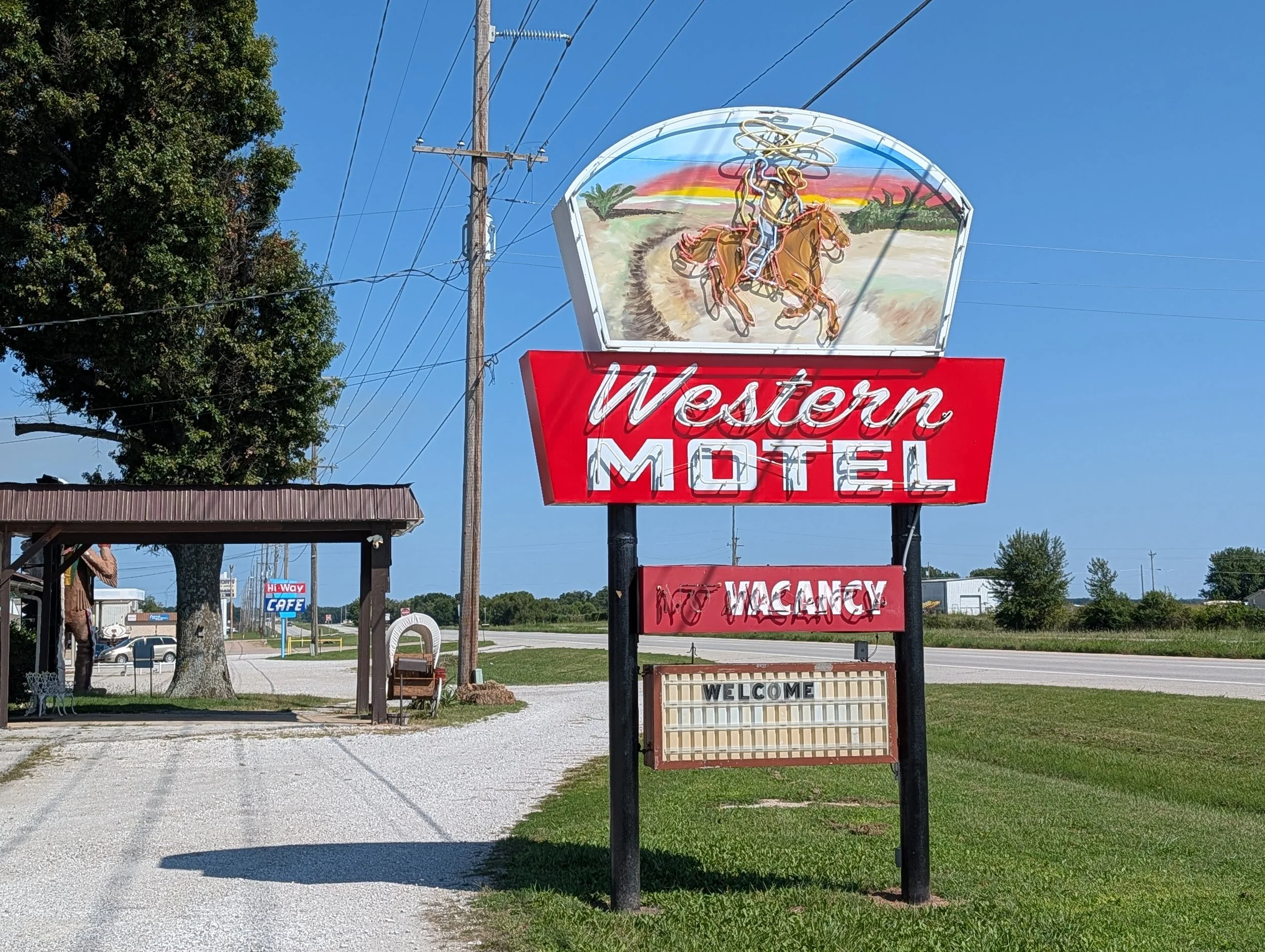
The Western Motel in Vinita, Oklahoma is one of the sites mentioned in the report. Their neon sign was built in 2025 with a grant from the Oklahoma Route 66 Association.
The Federal Reserve Bank of Kansas City has published a new report examining how small towns have successfully used route-based tourism as a valuable strategy for economic development.
The report, titled “The Byways Report: The Scenic Route to Rural Prosperity” frames the issue through the 100th anniversary of Route 66, the epic 2,448-mile road trip that crosses eight states from Chicago to Los Angeles. Four of those states – Missouri, Kansas, Oklahoma and New Mexico – lie in the Tenth Federal Reserve District, which the Kansas City Fed serves. While focused on Route 66 in Oklahoma, the report includes interviews with national experts on rural development and byways tourism, as well as the experiences of people involved with byways around the U.S.
“The major theme and biggest surprise from this research is that long-time residents of small towns often can’t see what might draw visitors,” said Jennifer Wilding, community engagement advisor at the Kansas City Fed and the report’s author. “Newer or younger residents have helped others see the town with fresh, appreciative eyes and have led the way in spurring unique approaches to economic development in many communities.”
The National Travel Center found that a byway can feasibly generate between $250,000 and $450,000 per mile per year in visitor spending when it features heritage and cultural locations, offers visitors plenty of places to visit and opportunities to spend money, includes destination-distinctive accommodations and local cuisine, and is well-promoted.
The report also finds that byways can be an especially good fit for small towns and rural areas for several reasons:
There are often miles between small towns, usually in the countryside. These can be attractive places for people to visit because of the surrounding geography.
A group of towns can create their own byway based on their specific regional heritage and assets.
No single town needs to be responsible for all the work. In fact, a byway works best when each town along a route plays to its individual strengths.
Stories in the report feature young entrepreneurs preserving the past in Miami, Okla.; the Cherokee Nation telling its story and a vintage café creating memorable experiences in Vinita, Okla.; a group of creative residents bringing new life to Route 66 in Clinton, Okla.; an 80-year-old artist using art as economic development in tiny Sayre, Okla.; and other stories from Oklahoma, Red Cloud, Neb., and the Crooked Road Music Trail in Virginia.
“The Byways Report” also highlights an array of technical resources that can help states, regions and towns leverage route-based tourism as part of their efforts to build rural prosperity. It shares ten themes based on interviews for those wanting to strengthen or start a byway, including embracing entrepreneurism as an economic strategy, preserving the history and heritage of the town, thinking in terms of collaboration not competition, and reaching out to destination marketing and regional development organizations for support.
To download a PDF version or request a free printed copy of the report, visit https://www.kansascityfed.org/the-byways-report.
As part of its work to support financial stability, the Kansas City Fed works to connect with communities in its region to promote economic development, access to credit and public understanding.
As the regional headquarters of the nation’s central bank, the Kansas City Fed and its branch offices in Denver, Oklahoma City and Omaha serve the seven states of the Tenth District: Colorado, Kansas, Nebraska, Oklahoma, Wyoming, northern New Mexico and western Missouri.