
Save the Ribbon Road Campaign
For six years, the Oklahoma Route 66 Association worked to preserve one of the most important sections of Historic Route 66 in the country: the Ribbon Road.
Starting in 2020, Ottawa County Commissioners began planning for the replacement of the Ribbon Road near Miami, Oklahoma. The Oklahoma Route 66 Association engaged multiple local, regional, and statewide agencies to express our concerns that the project would fundamentally change one of the road’s most unique segments, destroying its original character. We worked publicly and privately, encouraging the powers that be to PRESERVE this piece of Route 66 history - not destroy it. We were only partially successful, and even that success came at a cost.
A history of the road and details about the project are below.
HISTORY
In the early 1920s, several years before US Highway 66 came into being, the State of Oklahoma was already working on paving their most traveled roads. Legend has it that, due to budgetary constraints, officials had a choice about the section between Miami and Afton: pave half of it and wait, or pave all of it at half the width. Of course, automobiles were not yet terribly common…so if one car encountered another coming the other way, one could just pull off to the side to let the other pass. Not only is the nine-foot-wide lane unique, but the makeup of the pavement is different than any other roadbed along Route 66. A thin layer of asphalt is contained within concrete curbs and a base.

This road served as Route 66 from its inception in 1926 until it was bypassed in 1937. A few miles of the original road survived into the 21st century, with about three miles of it on the south side of Miami. Admittedly, the road needed repair. Age is a factor, but since the 1990s the use of gravel and grading equipment had caused an accelerated decay of the existing roadbed. If you’d ever driven it yourself, you know that entire sections of the original pavement are missing and the visible areas were rough, pitted, and in need of attention. Local traffic is mostly heavy agricultural machinery, which further damages the century-old road.
Still, it attracted the attention of travelers from around the world. You could often find rental cars and classic cruisers on the single lane, taking in a landscape that had changed very little since those early days. It’s a unique tourist attraction that has no equal anywhere else between Chicago and Santa Monica. It was even added to the National Register of Historic Places in 1994.
Project Timeline
In March of 2020, a public meeting was held in Miami, Oklahoma to talk about plans to rehabilitate the road. Ottawa County Commissioner Russell Earls led a presentation which outlined several proposals. Options included widening one side of the road and creating a parallel, modern road…making the ribbon a shoulder. Others included widening the gravel shoulders, which would not solve the issue with ongoing damage from grading equipment.

Public Meeting in March, 2020
Of course, the pandemic slowed everything down. It took nearly three years before Ottawa County reached the next step: Section 106. This is a process of review that must be undertaken any time a historic asset is impacted by modern construction and federal resources are used. Although this is a county road, federal funds were being sought to undertake this project. The Oklahoma Department of Transportation facilitated this process between Ottawa County and all identified stakeholders.
The initial Section 106 contact came in January of 2023 and the Association formed a committee to track and respond to project proposals. The proposal called for restoring the Ribbon Road and paving the gravel shoulders with a tinted chip-and-seal surface to emulate the look setting the road apart from its surroundings. But that’s not all.
The plan also called for the concrete curbs to be chopped off and re-poured rather than repaired. Additionally, the asphalt was to be entirely milled up and replaced with a modern mix. A 2019 core sample taken by Rich Dinkela of Missouri, proved the existing asphalt was historic in nature (due to the aggregate used) and had a higher asphalt content than modern materials. The work plan would destroy the very fabric of the road the county claimed it wanted to save.
The Association responded firmly that destroying the road in order to preserve it – wasn’t preservation at all. We agreed that certain sections were decayed beyond repair, but that significant sections of the Ribbon Road could be patched and retain the historic, authentic road that attracts visitors from around the world.

Ribbon Road in 1993, courtesy of Shellee Graham

Ribbon Road in 2001, courtesy of the National Park Service

Ribbon Road in the summer of 2023
Over the summer, more meetings were held with members of the Oklahoma Legislature, the Ottawa County Commissioners, and others to express our concerns and desire for a preservation-minded solution. ODOT led a call in September of 2023 to bring all consulting parties together to hear their concerns, including ours.
In December, the county came back with an alternate proposal. This time, they proposed leaving the Ribbon Road alone entirely and adding two modern, striped asphalt lanes on either side. This, too, was an unacceptable alteration and that’s how the Association responded.
On February 16th, 2024, a second revision was presented. Now, the concrete curbs would be patched where possible rather than chopped off – but the milling up of the asphalt and replacing with a modern, inauthentic mixture was still there and the chip-and-seal lanes are to be striped. Here is a graphic representation of what that will look like.

Once again, the Oklahoma Route 66 Association communicated that it was unacceptable that the historic materials would not being retained. After several more meetings and conference calls, Ottawa County said it was going to proceed with the plan as-is.
After one more public push (including the installation of a few Burma Shave-inspired signs along the road), a compromise was reached to leave one of the three miles impacted alone. The rest of the project proceeded.
News and Updates from 2024
Call to Action
Our change.org petition reached nearly 3,000 signatures; it was created to demonstrate to Ottawa County that this road means a lot not just to us here in Oklahoma, but to people from around the world. Although this kind of petition isn’t always actionable, it served as a show of strength in numbers.
We believe this action directly led to the negotiated compromise that left one mile of Ribbon Road out of the reconstruction work plan. Our sincere THANKS to the below officials that supported us so that this entire section of Historic Route 66 would not be lost.
Bless Parker - Mayor of Miami OK
Steve Bashore - State Representative
Tim Gatz - Director of ODOT
Matt Pinnell - Lt Governor of Oklahoma
Project Completion and Aftermath
In June of 2026, the Oklahoma Route 66 Association was notified that the project was complete. When the Route 66 Centennial Caravan came through on June 19th, they took the Ribbon Road into Miami.
The end result is a a hybrid of previous proposals that has forever changed one of Oklahoma’s most beloved sections of the Mother Road. The original road, which was mostly untouched (some culverts had been put in, requiring the old pavement to be removed in a few sections), had been heavily damaged by heavy trucks and other equipment that had used that part of the road for staging. The county still has no plans to patch or repair this original one mile segment, which is the southwestern-most part of the road leading to a granite marker.
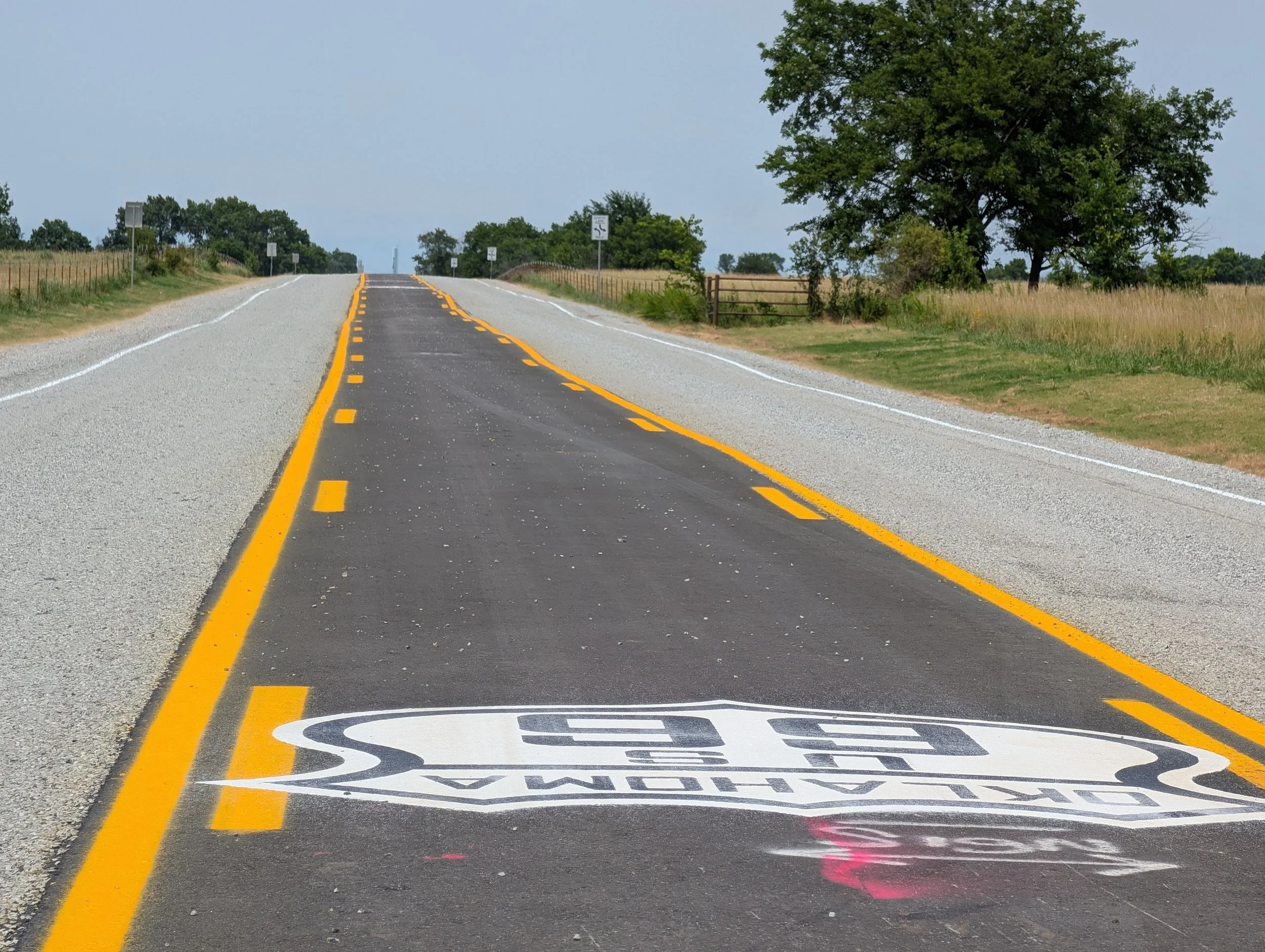
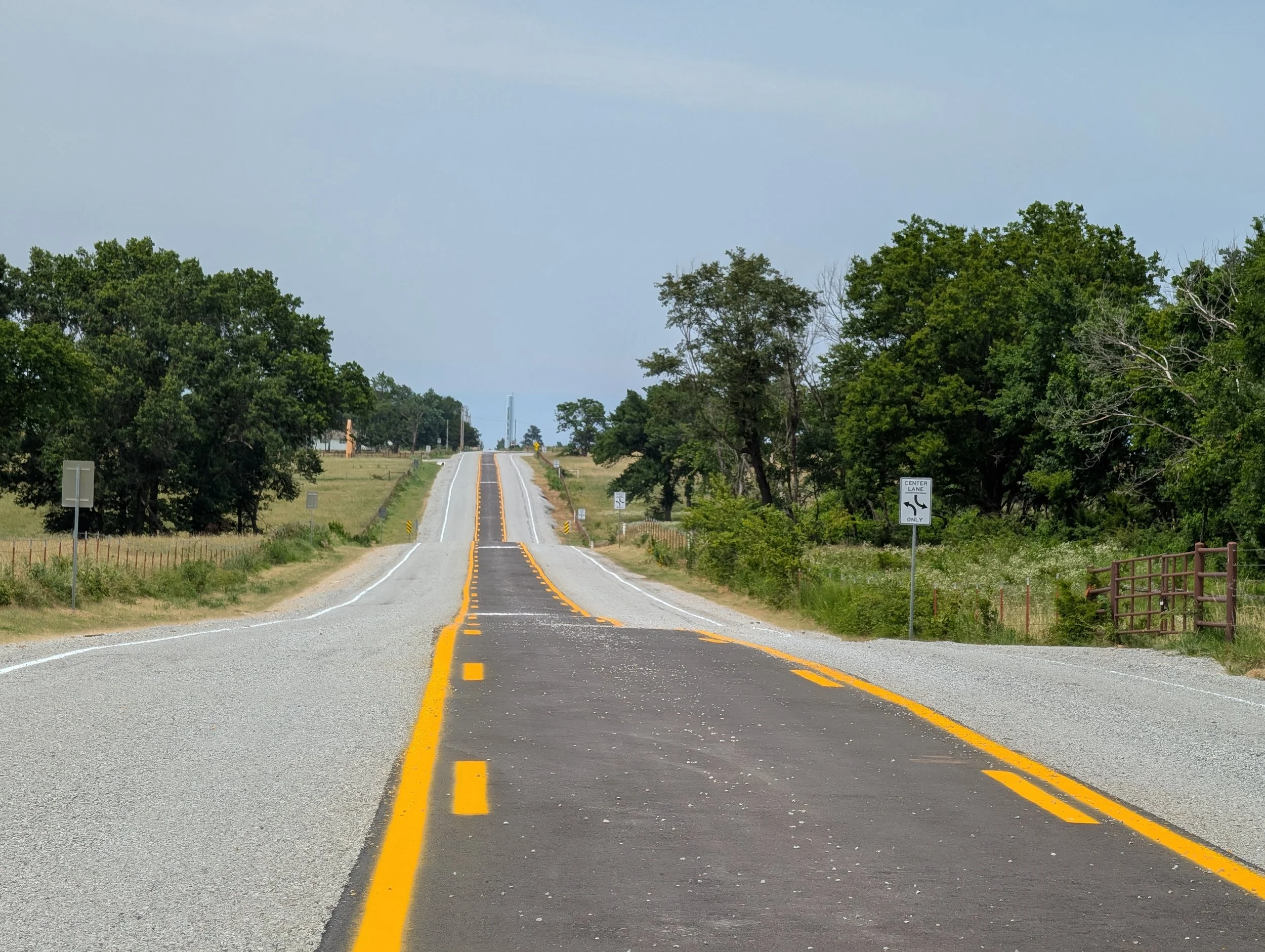
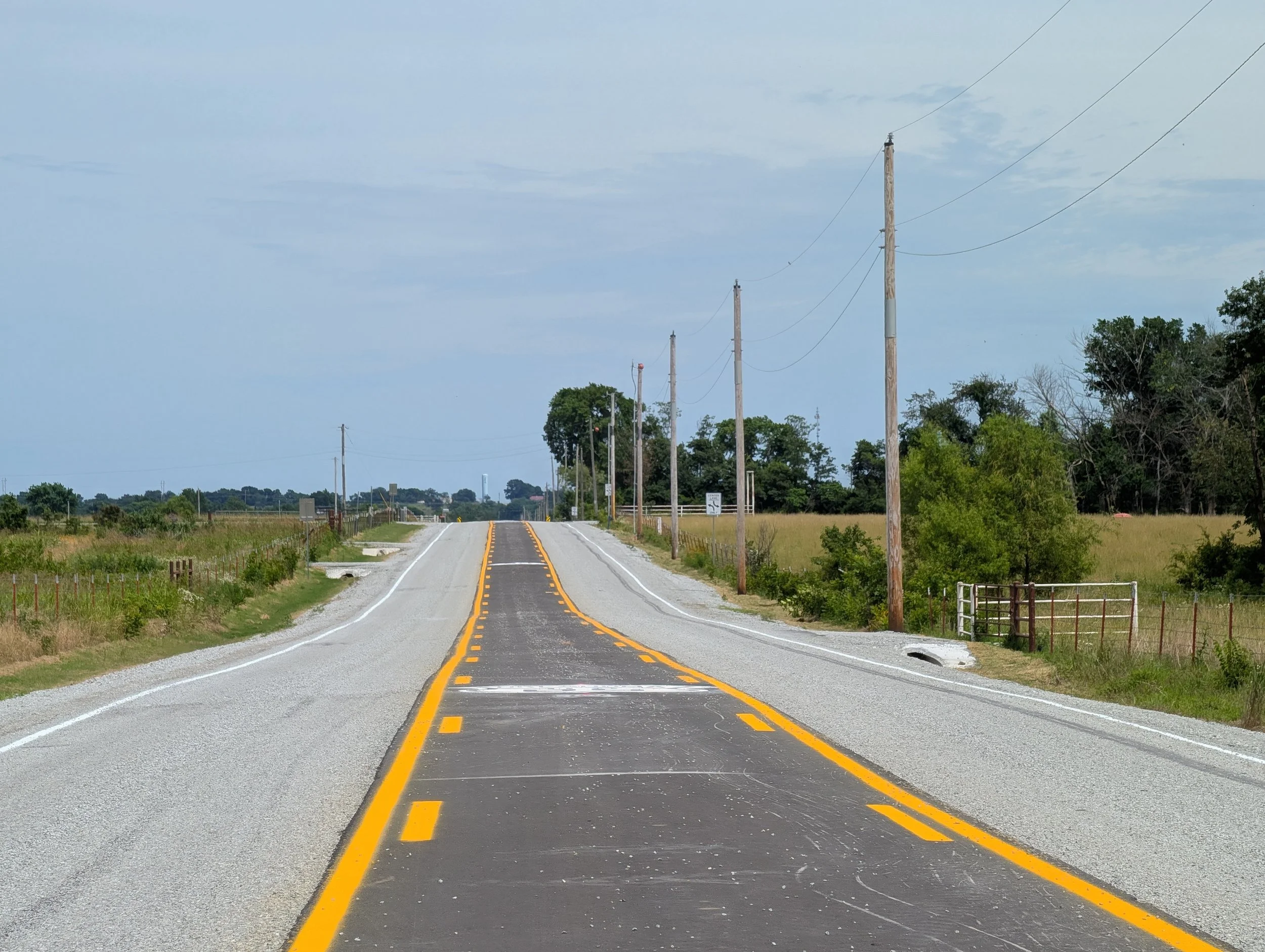
The reconstructed part of the road does contain new asphalt, but the concrete curbs are gone. The road has also been painted with yellow lines and signs clearly state that it is to be used for turning only. The shoulders, which are still gravel, have been expanded, which means many of the trees that lined the road are also gone. The maintenance of these shoulders will surely cause the new lane to degrade quickly due to the use of spreaders and other heavy machinery.
All in all, the road is a shadow of its former self. The local paper praised the work plan as ‘preserving’ the road, but to the Oklahoma Route 66 Association and roadies around the world, this was not a preservation project. This was a replacement of a piece of Route 66 that we will never get back.